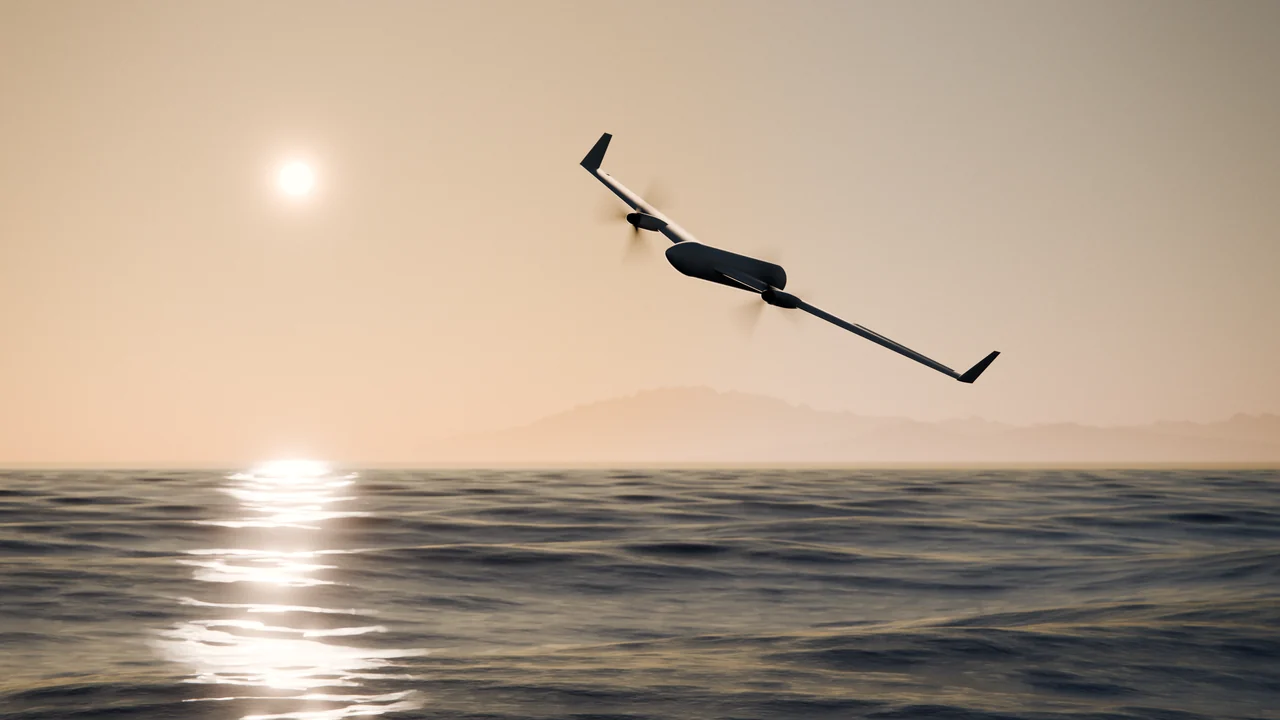
We make drones
that
can fly
and swim.
Thesis
Unmanned systems changed the battlefield. Hybrid platforms are the next evolution.
Concept of Operations
We close the air–sea gap.
- 01
Air transit
Fixed-wing flight to the area of operations.
- 02
Water entry
Transition from flight to subsurface operation.
- 03
Subsurface transit
Low-signature movement and loiter beneath the surface.
- 04
Breach and egress
Exit the water and return to flight.
Mission areas
Built for missions that cross the waterline.
Littoral ISR
Attritable intelligence, surveillance, and reconnaissance in contested coastal waters, from the air and below the surface.
Mine countermeasures
Countering naval mines, a mission set that spans the air, the surface, and the water column.
One-way strike
One-way strike in the littorals, using a low-cost airframe that can approach by air or from below the surface.
Status
Building towards real-world deployment.
Premise validated by warfighters. Platform validated in simulation. Real-world testing underway.
- TRL 1, complete: 1
- TRL 2, complete: 2
- TRL 3, complete: 3
- TRL 4, current: 4
- TRL 5, ahead: 5
- TRL 6, ahead: 6
- TRL 7, ahead: 7
- TRL 8, ahead: 8
- TRL 9, ahead: 9
Team
Founded by MIT engineers who build hardware.
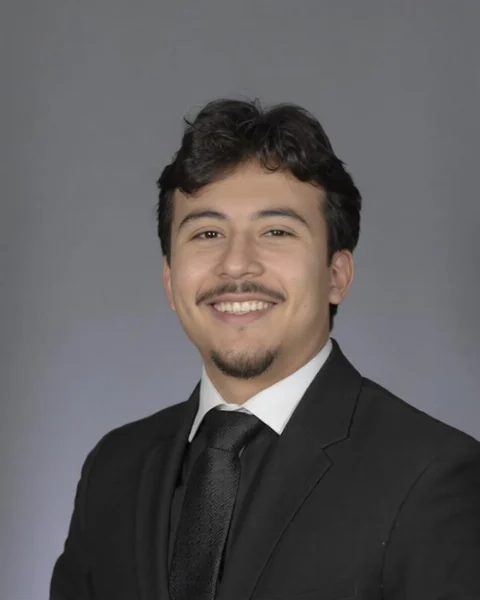
Jorge Cavazos
COO & Co-Founder
MIT Aeronautics and Astronautics.
Prev. Oligo Space, MIT Bioinstrumentation Lab.
Alex Rice
CTO/CFO & Co-Founder
MIT Electrical Engineering and Computer Science.
Prev. Draper, MIT Lincoln Lab, MITRE, NASA.
IEEE published.
Joel Santiago-Baretti
CEO & Co-Founder
MIT Mechanical Engineering.
Prev. Stealth Startup and MIT TTDD Lab.
IEEE published.



Request a briefing.
Government / Industry
Briefings for program offices, units, and labs evaluating multi-domain unmanned systems.
Investors
Talk directly with the founders about Kairox and the Tempest program.